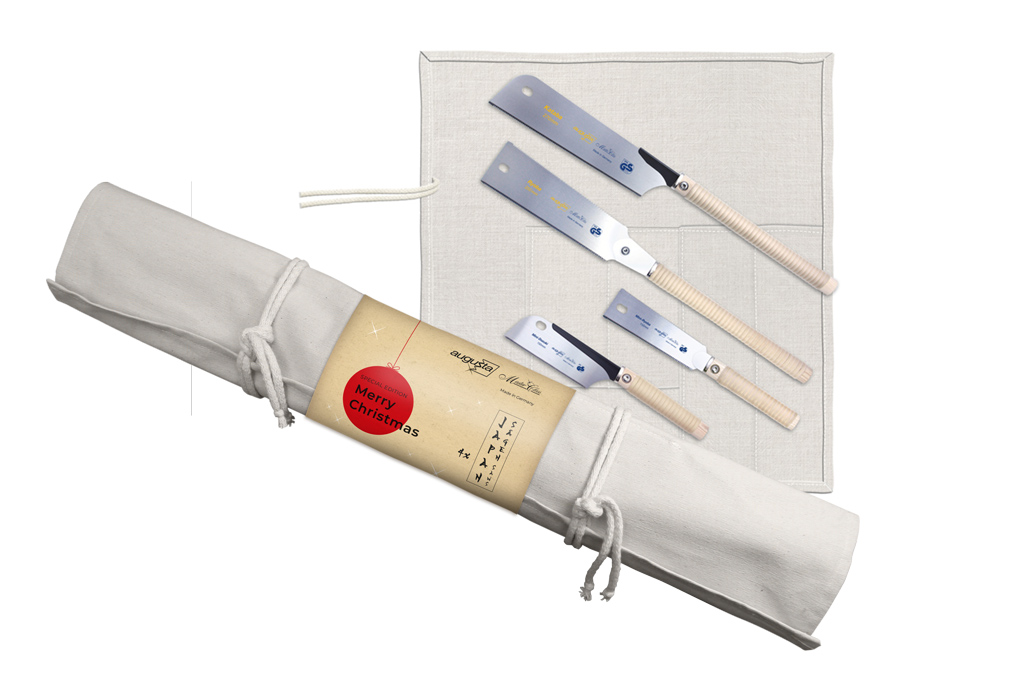
Features of the Dozuki:
Precise teeth and smooth blade guidance
Tooth Geometry and Gearing:
The most distinctive feature of a dozuki is its tooth geometry. The teeth are fine, sharp, and angled toward the handle, allowing for precise cutting with a pulling motion. These saws are specifically designed for precise cuts in wood and leave a smooth surface without tear-outs.
Sheet Thickness and Stability:
Dozukis saw blades are thin compared to other saws, which allows for particularly clean cuts. In addition, the saw blade is stabilized by a reinforced back, which increases precision and control during cutting.
Handle Design:
The handle of a dozuki is long and makes it comfortable to use. It is made either of sturdy wood, traditionally wrapped in raffia, or of durable plastic for added comfort.
Applications:
Precision cutting and demanding jobs
Fine carpentry:
Dozuki saws are particularly effective for fine woodworking tasks, such as fitting veneers, cutting miters, or sawing joints for furniture. Their fine teeth allow for precise cuts, which are often essential in the art of woodworking.
Woodworking and Art:
Artists and woodworkers value Dozukis for their ability to create intricate woodwork. The precise cuts make it possible to perform fine miter cuts or carve intricate details into wood, such as in model making or other craft projects.
Care and Handling:
Fine-Tuning for Long-Lasting Precision
Regular maintenance is essential to maintaining the precision of a dozuki. Regularly cleaning the teeth to remove resin and wood fibers, as well as storing the saw in a dry place, ensures that it is always ready for use and delivers precise cuts.
Conclusion:
Dozuki—The Essence of Precision Work
Dozukis embody the highest art of Japanese woodworking. Their precise tooth geometry, thin saw blades, and ergonomic handles make them an indispensable tool for anyone who demands the highest standards in their woodworking. In the world of hand tools, dozukis are true masters of fine workmanship and precision.